
Operational intelligence that drives measurable EBITDA impact — transforming trip data into root cause analysis, performance KPIs, and disciplined continuous improvement.
Railway data is abundant. What most operators lack is a structured process to turn that data into decisions — and those decisions into measurable outcomes. Locomotive event recorders capture thousands of data points per trip. Without the right analytics layer, that information sits unused while operational variability compounds into fuel waste, extended transit times, and recurring losses.
ART’s Data & Analytics Platform transforms operational signals into prioritized, actionable intelligence. Built on the same data infrastructure as ART’s train control and onboard systems, the platform eliminates the gap between what is measured and what is acted upon — connecting operational execution directly to financial performance.
The methodology is grounded in the PDCA cycle: establish performance benchmarks by trip and block section, measure adherence in real time, identify root causes of deviation, and close the loop with feedback to crews, supervisors, and executive leadership. Every improvement is traceable to a specific operational signal.
What It Does
From operational signals to financial outcomes — with a closed loop that runs from the locomotive cab to the P&L.
A connected platform that turns operational data into measurable action — integrating analysis, benchmarking, and improvement into a single system.
the single platform through which ART delivers all management and driving efficiency solutions: trip management, driver profiles, scoring, and continuous improvement tools
trip-level visualization, block section analysis, speed and fuel adherence per trip and per driver
initiative management platform: configure a baseline, record an action, measure whether it moved the needle. Turns the Check and Act phases of PDCA from intuition into evidence.
operators flag trips or block sections as operational benchmarks, generating versioned target references by route and train type
versioned catalog of target journeys with defined validity periods and automatic comparison against actuals
driver performance gamification engine: championships, individual and team rankings, scoring tied directly to fuel and transit time performance
operational context enriches every analytics layer
Insights embedded directly into operational workflows — not isolated in a reporting tool that nobody acts on.
Every operational improvement is traceable.
Every financial outcome is measurable.
That is the only kind of intelligence that moves a P&L.
How We Deploy
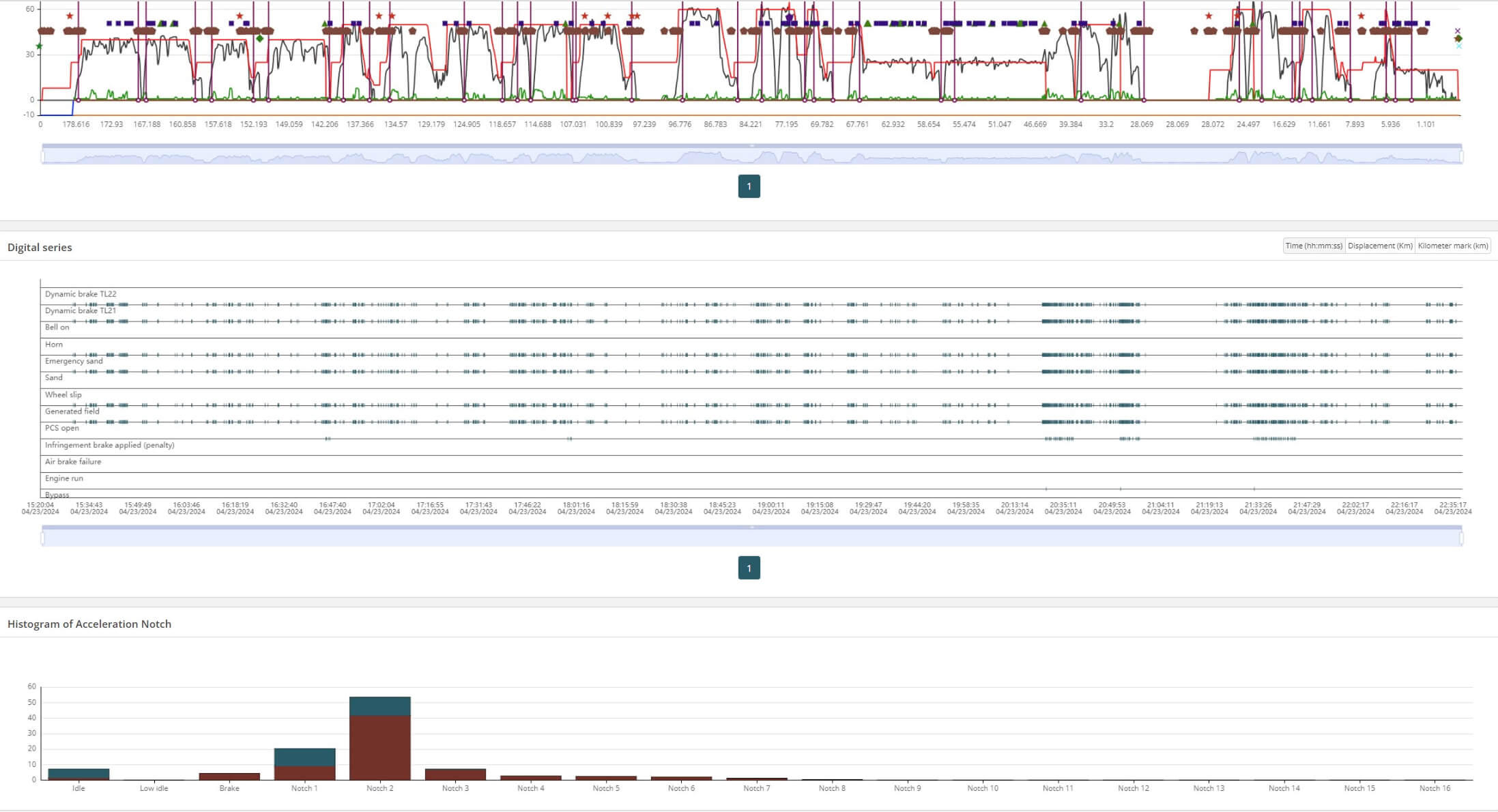
Unlike generic analytics platforms, ART's intelligence layer is built directly on control-system integration — delivering insights that operators can act on immediately.
Generic analytics platforms describe performance.
ART’s platform changes it.
The difference is integration. When the analytics layer is built on top of the same data infrastructure as train control and onboard systems, the signal-to-action loop closes in minutes — not in the next management meeting.
ART has proven this across multiple freight networks. The statistical evidence is documented. The financial impact is calculated. The methodology is repeatable.
Generic analytics platforms describe performance.
ART’s platform changes it.
The difference is integration. When the analytics layer is built on top of the same data infrastructure as train control and onboard systems, the signal-to-action loop closes in minutes — not in the next management meeting.
ART has proven this across multiple freight networks. The statistical evidence is documented. The financial impact is calculated. The methodology is repeatable.